
Databases in 2026
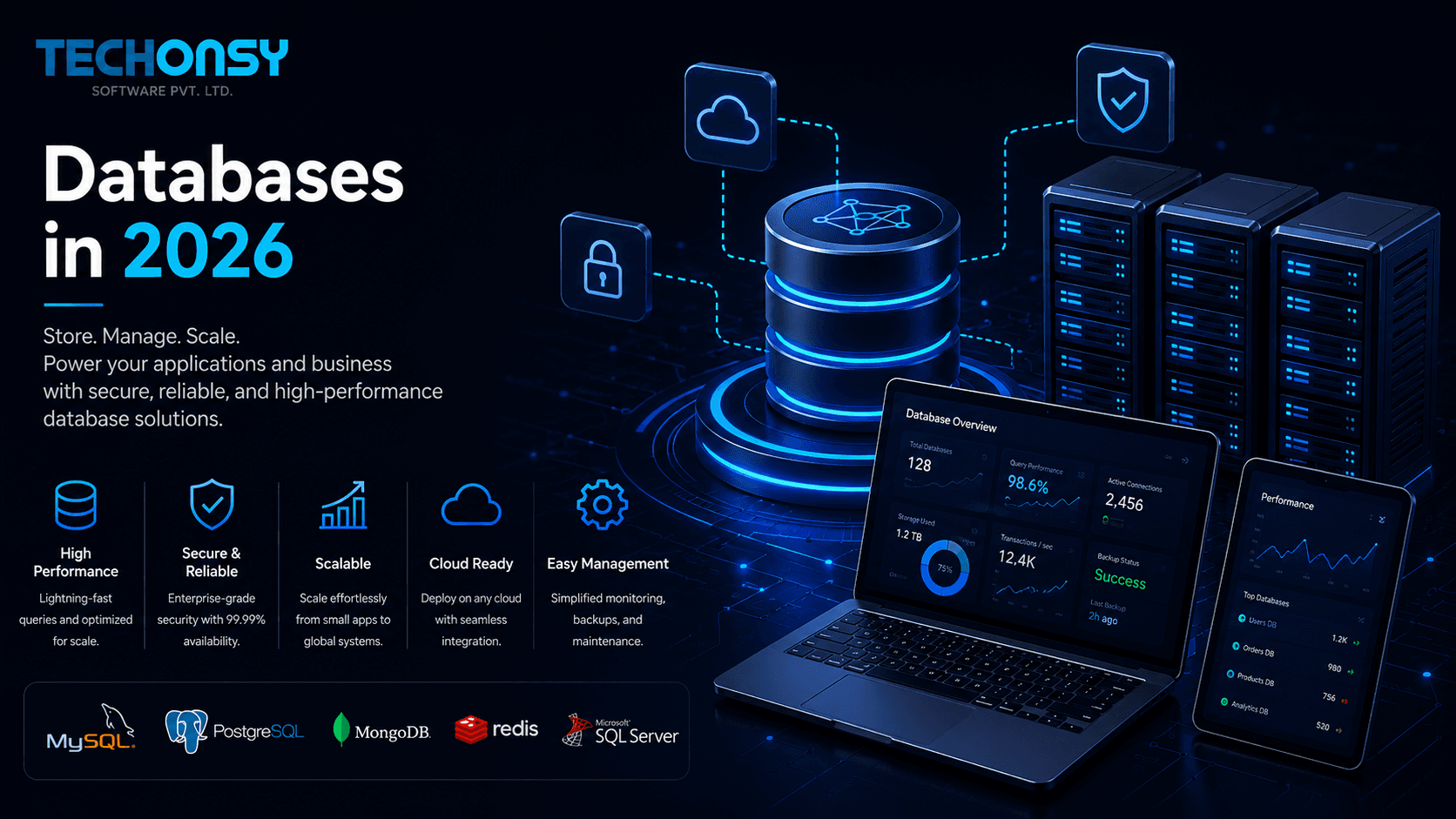
Database choice used to be one of the first, most consequential decisions a team made — and one of the hardest to undo. That's less true today. The lines between database categories have blurred, migration tooling has improved, and most products can survive an imperfect early choice. But the fundamentals of picking well haven't changed: understand your data's actual shape and access patterns before reaching for whatever's trending.
Here's a grounded look at where databases stand today, and how to think about choosing one.
Postgres Has Quietly Become the Default Answer
If there's one clear trend in databases over the last several years, it's the rise of Postgres as the default starting point for most new applications — not because it's flashy, but because it's genuinely versatile. Native JSON support gives it much of the flexibility that used to be NoSQL's main selling point, while full ACID compliance and mature tooling keep it reliable for transactional workloads.
Extensions have only strengthened this position — pgvector for AI embeddings, PostGIS for geospatial data, and TimescaleDB for time-series workloads all mean Postgres can absorb use cases that used to require a completely separate specialized database.
NoSQL Still Matters — For the Right Shape of Data
The instinct to reach for NoSQL "because it's more scalable" has faded as teams learned the hard way that scalability isn't really the differentiator it was marketed as. What NoSQL databases are genuinely good for is specific data shapes and access patterns:
Document stores (MongoDB) — good for deeply nested, evolving data structures where schema flexibility matters more than complex joins.
Key-value stores (Redis, DynamoDB) — excellent for fast lookups, caching, and session data where the access pattern is simple and predictable.
Wide-column stores (Cassandra, ScyllaDB) — built for massive write throughput and horizontal scale, common in high-volume event or IoT data.
The right question isn't "SQL or NoSQL" in the abstract — it's "what does this specific data actually look like, and how will it be queried?"
Vector Databases Went From Niche to Necessary
The rise of AI features built on embeddings — semantic search, retrieval-augmented generation, recommendation systems — created real demand for a database category that barely existed as a mainstream concern a few years ago. Purpose-built vector databases (Pinecone, Weaviate, Qdrant) compete directly with vector extensions bolted onto existing databases (pgvector being the most common).
For most teams already running Postgres, adding pgvector is the lower-friction choice. Purposebuilt vector databases earn their place when vector search is the primary workload, not a feature bolted onto an existing product.
Serverless and Edge Databases Changed the Deployment Story
Traditional databases assumed a persistent connection to a long-running server — a poor fit for serverless functions that spin up and down constantly. Serverless-native databases (Neon, PlanetScale, Turso) and connection-pooling layers built specifically for this pattern have closed that gap, making it realistic to pair a traditional relational database with a fully serverless backend without connection exhaustion becoming a constant headache.
Read Replicas and Caching Still Do Most of the Heavy Lifting
Before reaching for a more exotic database architecture, most performance problems are still solved by the same two tools that have worked for years:
Read replicas — offloading read-heavy traffic from the primary database, which handles the vast majority of real-world scaling needs.
Caching layers (Redis, Memcached) — keeping frequently accessed data out of the database entirely for the requests that matter most for latency.
A surprising number of "we need a bigger database strategy" conversations are actually solved by better caching and query optimization, not a new database.
Multi-Model and "One Database to Rule Them All" — Handle With Care
Some databases now market themselves as multi-model, capable of handling relational, document, graph, and key-value workloads all in one system. This can genuinely simplify operations for smaller teams. But it's worth being honest about the tradeoff: a database that does everything moderately well is not the same as the best tool for any single one of those jobs. This approach earns its keep more through reduced operational overhead than through best-in-class performance in any one mode.
How to Actually Choose
A few honest questions matter more than benchmark comparisons:
What does the data actually look like — structured and relational, deeply nested, or simple key-value?
What's the read/write ratio, and does it justify a specialized architecture, or is a well-indexed Postgres instance enough?
Does your team already know how to operate this database well? Operational familiarity often outweighs a marginal technical advantage.
What's the actual scale, not the scale you're hoping for in three years? Most products never reach the point where their initial database choice becomes the bottleneck.
The Bottom Line
Databases in 2026 reward the same instinct that serves most engineering decisions well: start with the boring, well-understood option — usually Postgres — and reach for something more specialized only when a real, measured need shows up. The database landscape has more choices than ever, but the best choice for most teams is still the one they can operate confidently, not the one with the most interesting name.