
DevOps and Infrastructure in 2026
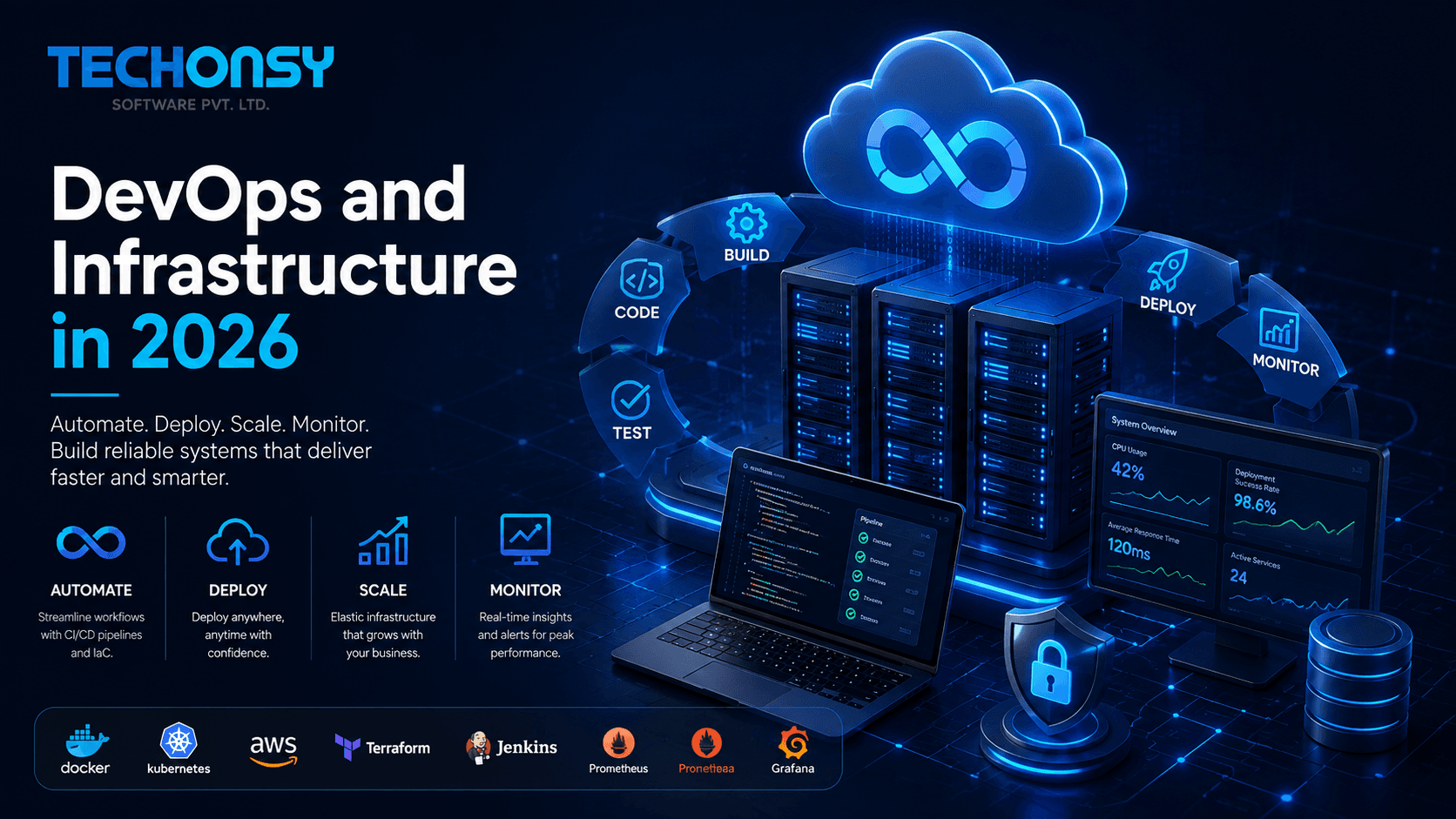
DevOps started as a cultural idea — breaking down the wall between people who write code and people who run it. Years later, that idea has hardened into a real discipline with its own tools, patterns, and hard-earned lessons. The teams that do it well ship faster and sleep better. The teams that treat it as an afterthought end up firefighting in production.
Here's where DevOps and infrastructure practice stands today, and what actually matters.
DevOps Is a Practice, Not a Job Title
One of the most persistent confusions is treating "DevOps" as a role you hire for, rather than a set of practices a whole team adopts. Hiring one "DevOps engineer" and expecting them to singlehandedly own reliability, deployment, and infrastructure for a growing product is a common way teams end up with a bottleneck instead of a culture.
The healthier model: developers own their code through deployment and into production, supported by shared tooling, standards, and — at scale — a platform team that builds the paved road everyone else uses.
Infrastructure as Code Is Non-Negotiable Now
Manually clicking through a cloud console to provision servers is no longer a defensible practice for anything beyond a weekend project. Tools like Terraform, Pulumi, and cloud-native options like AWS CloudFormation have made infrastructure as code (IaC) the default expectation, not a nice-to-have.
The value isn't just automation — it's that infrastructure becomes reviewable, versioned, and reproducible. A misconfigured production environment stops being a mystery you debug by hand and becomes a diff you can read.
CI/CD: The Pipeline Is the Product
A slow or flaky CI/CD pipeline quietly taxes every engineer on a team, every single day. Fast feedback loops — tests that run in minutes, deploys that happen many times a day, rollbacks that take seconds — compound into a real competitive advantage over time.
A few things that separate strong pipelines from weak ones:
Tests run in parallel and fail fast. Nobody should wait 40 minutes to learn they broke a build.
Deploys are boring. If deploying to production feels risky or requires a special ritual, that's a sign the pipeline needs work, not a sign to deploy less often.
Rollback is a first-class action. Being able to revert quickly matters more than trying to prevent every possible failure upfront.
Observability Has Replaced "Monitoring"
Traditional monitoring answered a narrow question: is the server up or down? Modern systems are distributed, ephemeral, and far more complex, so the question has shifted to: why is this specific request slow, for this specific user, right now?
That shift is what observability — the combination of logs, metrics, and traces, often through tools like OpenTelemetry, Datadog, or Grafana — is built to answer. Teams that invest in this early spend far less time guessing during incidents.
Containers and Kubernetes: Powerful, Often Overused
Kubernetes solved real problems for companies running large, complex, multi-service systems at scale. It's also been adopted by plenty of teams that didn't need that much power, and paid for it in operational complexity they weren't ready to own.
A more honest framing: containers (Docker) are broadly useful for almost everyone — they make environments reproducible and deployments predictable. Kubernetes specifically is worth adopting when you have genuine orchestration needs — many services, complex scaling patterns, multi-team ownership — not by default because it's the industry standard.
Security Belongs in the Pipeline, Not at the End
"Shift left" has become a cliché, but the underlying idea holds up: catching a vulnerable dependency or a misconfigured permission during a pull request is dramatically cheaper than catching it after a breach. Automated dependency scanning, secret detection, and infrastructure policy checks running directly in CI/CD are now baseline practice, not advanced tooling.
What This Means for Teams Building This Out
Start with infrastructure as code from day one — retrofitting it onto an already-manual environment is painful.
Invest in pipeline speed early; it's one of the highest-leverage things a team can fix.
Add real observability before you need it in an incident, not during one.
Reach for Kubernetes because you have the scaling and orchestration problems it solves — not because it's what everyone else is using.
The Bottom Line
Good DevOps and infrastructure work is mostly invisible when it's done well — deploys just happen, incidents get resolved quickly, and nobody's paged at 3AM for a problem that could've been caught in review. The goal was never to adopt the most tools. It's to build systems boring enough to trust. • • • •