
Emerging Technologies in 2026
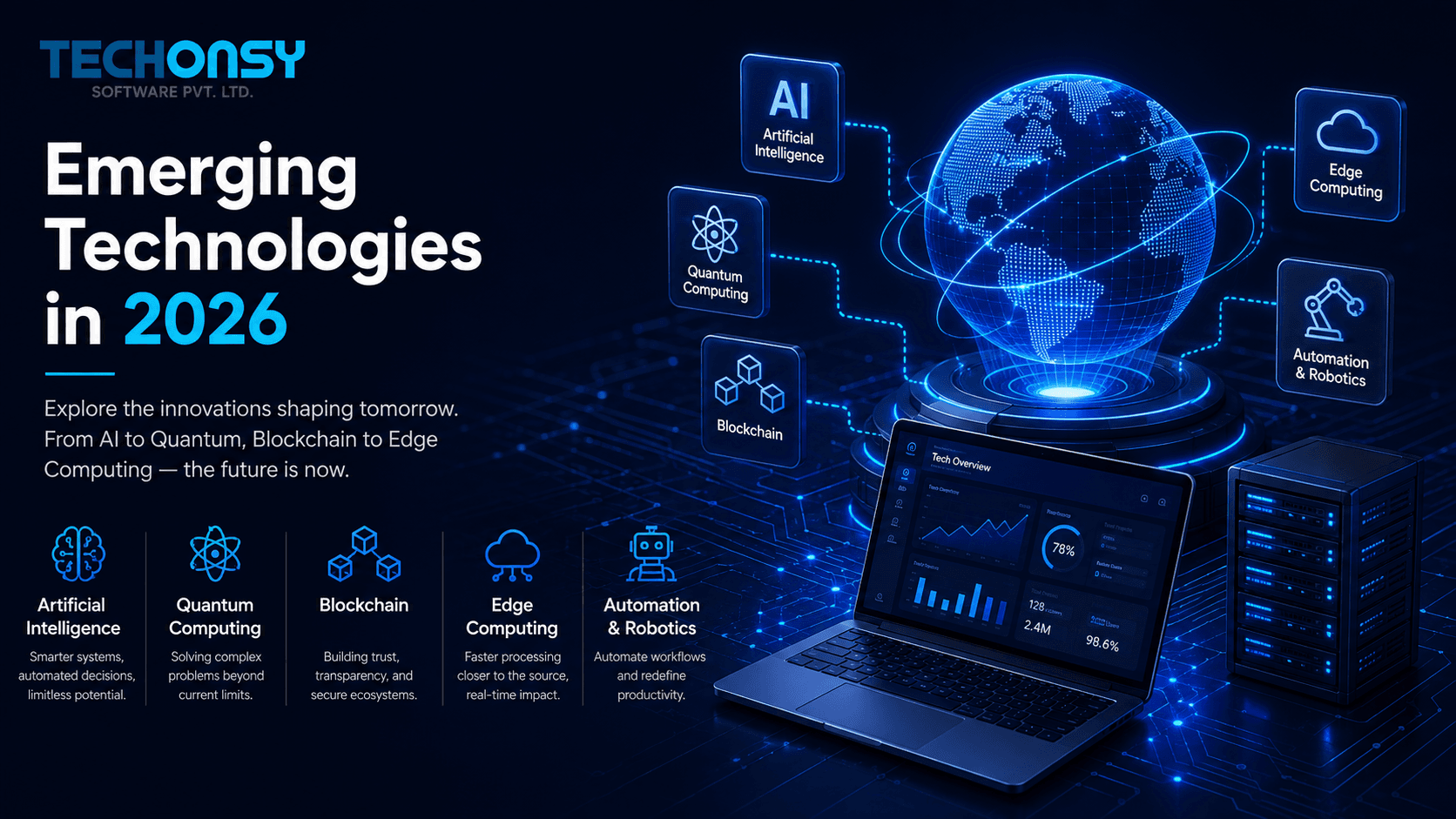
Every year brings a fresh wave of "this changes everything" headlines, and most of them fade quietly within a few quarters. Separating genuine shifts from hype cycles is one of the more valuable skills a technical team can have — not because the hype is always wrong, but because timing matters. Adopting something too early wastes resources; adopting it too late means catching up from behind.
Here's a grounded look at the technologies genuinely worth watching right now, and how seriously to take each one.
Edge Computing Is Quietly Becoming Standard
Processing data closer to where it's generated — on-device, at a nearby edge node, rather than a distant centralized cloud — has moved from niche use case to standard architecture for latencysensitive applications. Real-time video processing, IoT sensor networks, and interactive AI features all benefit from cutting the round-trip to a faraway data center.
This isn't replacing the cloud; it's complementing it. The pattern that's emerging is hybrid by default — edge for what needs to be fast, cloud for what needs to be heavy or centralized.
Small, Specialized AI Models Are Having a Moment
While headlines chase the largest frontier models, a quieter and arguably more practical trend has been the rise of small, efficient models tuned for specific tasks. These models run cheaper, faster, and often on-device — enabling AI features in places where sending every request to a massive cloud model isn't feasible or affordable.
For most product teams, the realistic path forward isn't "use the biggest model available." It's picking the smallest model that reliably does the job, and that increasingly means smaller, specialized options deserve serious evaluation.
Quantum Computing: Real Progress, Still Early
Quantum computing continues to make genuine technical progress — error correction has improved, qubit counts have grown, and specific problem classes (certain optimization and simulation tasks) are edging toward practical relevance. But general-purpose quantum advantage for everyday computing problems remains distant.
For the overwhelming majority of teams, quantum computing isn't a near-term planning concern. It's worth tracking, not worth building around yet — with the exception of a narrow set of industries (cryptography, materials science, specific optimization problems) where the timeline is genuinely closer.
Extended Reality Has Found Narrower, Real Use Cases
The broad "metaverse" framing that dominated a few years ago has cooled considerably, but extended reality (AR/VR/mixed reality) hasn't disappeared — it's found more concrete footing in specific domains: industrial training, remote collaboration on physical tasks, medical visualization, and design/prototyping workflows. The lesson here is a familiar one: technologies that overpromise a total paradigm shift often still deliver real value, just in a narrower, less flashy form than originally pitched.
Post-Quantum Cryptography Is a Deadline, Not a Trend
Unlike most items on this list, post-quantum cryptography isn't optional or speculative — it's a genuine, scheduled obligation. As quantum computing advances, today's encryption standards face a real future risk, and organizations handling sensitive long-lived data are already being pushed toward quantum-resistant cryptographic standards. This is less "emerging technology to explore" and more "migration to plan for," particularly for any system handling data that needs to stay secure for years or decades.
Sustainable and Energy-Aware Computing
As compute demand — driven heavily by AI workloads — has grown, energy efficiency has shifted from a nice-to-have talking point to a real engineering constraint. Data center design, chip architecture, and even software efficiency are increasingly evaluated with power consumption in mind, not just raw performance. This trend is likely to keep growing in importance as compute heavy workloads become more central to more products.
How to Evaluate Any Emerging Technology
A few honest questions cut through most hype:
Does it solve a problem I actually have, or does it just sound impressive in a meeting?
What's the real cost of being early — in engineering time, in switching costs, in maintenance burden — versus the cost of adopting it a year later?
Is the ecosystem mature enough — documentation, tooling, hiring pool — to support it without heroics?
The Bottom Line
The technologies worth taking seriously right now aren't necessarily the loudest ones. Edge computing and specialized AI models are already reshaping real architectures. Post-quantum cryptography is a deadline dressed up as a trend. Quantum computing and extended reality are genuinely promising but still early for most teams. The skill that matters most isn't spotting the next big thing first — it's knowing which "next big thing" is actually ready for you.