
Frontend Development in 2026
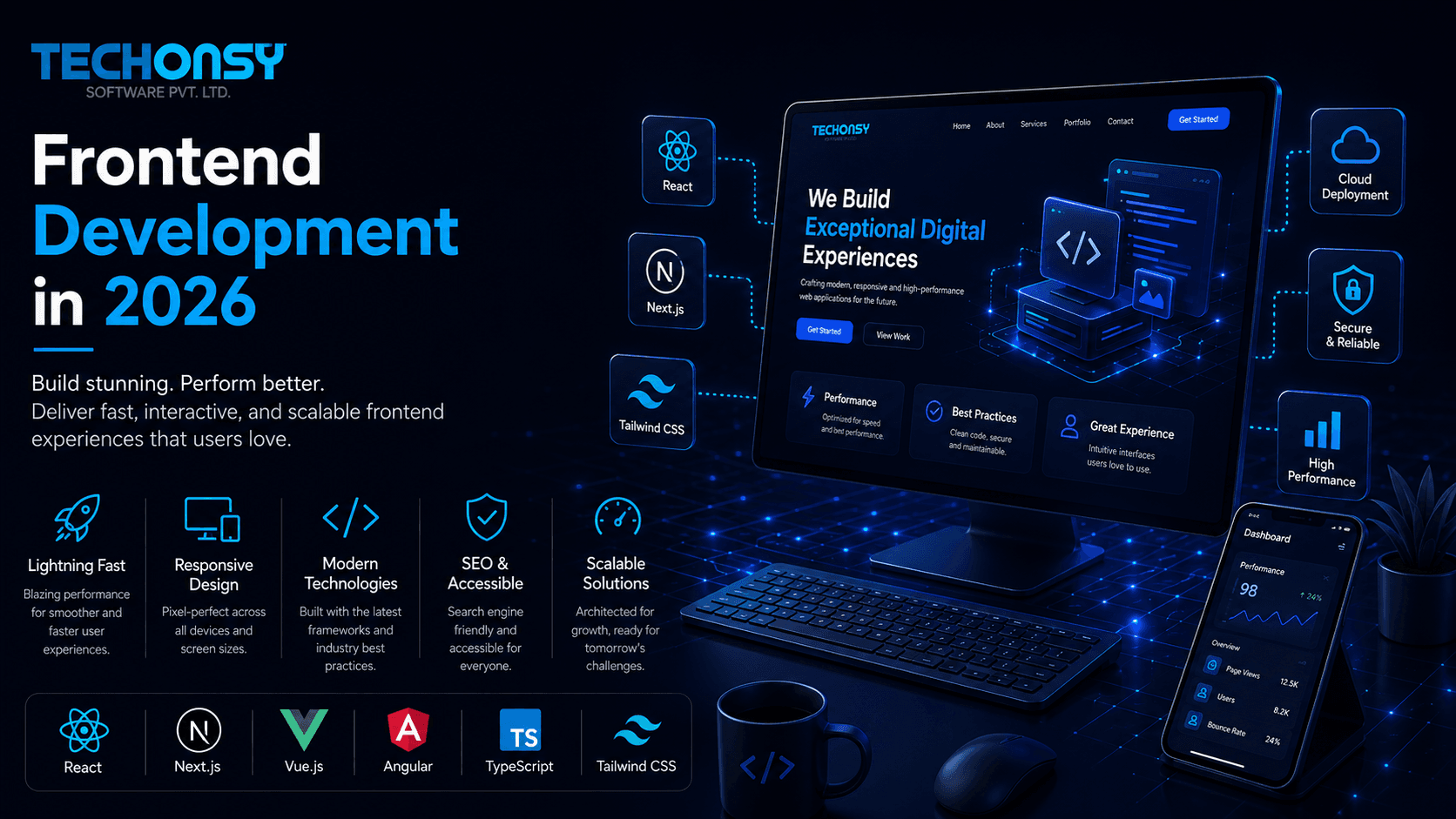
Frontend development has a reputation problem it doesn't quite deserve — dismissed by some as "just styling," while actually being one of the fastest-moving, most demanding areas of software engineering. The frontend is where performance, accessibility, design, and business logic all collide in front of a real user who notices everything, whether or not they can name what's wrong. Here's a grounded look at where frontend development stands today, and what actually separates good work from great work.
React Still Leads, But the Ecosystem Has Diversified
React remains the dominant choice for frontend development, largely due to its enormous ecosystem, hiring pool, and the strength of meta-frameworks like Next.js built on top of it. But it's no longer the automatic, unquestioned default it once was. Vue (via Nuxt) and Svelte (via SvelteKit) have matured into genuinely competitive options, often praised for simpler mental models, less boilerplate, and smaller bundle sizes. The realistic framing today: React wins on ecosystem and hiring, while Vue and Svelte often win on developer experience for teams not already locked into the React ecosystem.
Server Components Changed How People Think About Rendering
React Server Components — and the broader shift toward frameworks blending server and client rendering by default — represent one of the more genuine architectural shifts in frontend development recently. Instead of choosing once between "client-rendered app" or "server-rendered app," modern frameworks let different parts of the same page render in different places, based on what each piece actually needs. This has real benefits: less JavaScript shipped to the browser, faster initial loads, and simpler data fetching in many cases. It's also added real complexity to reason about — knowing which code runs where has become a genuine skill, not an implementation detail.
Performance Budgets Are No Longer Optional
Core Web Vitals and similar performance metrics have moved from "nice to optimize eventually" to a real factor in search ranking, conversion rates, and user retention. A few things that consistently separate fast-feeling frontends from slow ones:
Minimal JavaScript on first load. Code-splitting and lazy-loading non-critical UI keeps the initial experience fast.
Deliberate image handling. Modern formats, proper sizing, and lazy-loading below the fold still make an outsized difference.
Avoiding layout shift. Content jumping around as a page loads is one of the most user-visible signs of a poorly built frontend, even when everything technically "works."
Component Libraries Have Split Into Two Philosophies
The old model — a single opinionated component library you install and theme — has split into two distinct approaches. Fully-built libraries (like Material UI or Chakra) still offer speed and consistency out of the box. But a newer pattern, popularized by tools like shadcn/ui, has gained real traction: copy the component code directly into your project instead of installing it as a dependency, giving teams full ownership and customization without fighting an external library's constraints.
Neither approach is universally better — it's a real tradeoff between speed of setup and long-term flexibility, and more teams are consciously choosing based on that tradeoff rather than defaulting to whichever library is trending.
Accessibility Has Moved From Afterthought to Baseline Expectation
Accessibility used to be treated as a specialized concern, handled late in a project if at all. That's shifted meaningfully — partly due to legal exposure, partly due to a genuine cultural shift toward building for everyone by default. Semantic HTML, proper ARIA usage, keyboard navigation, and color contrast are increasingly checked in code review and CI, not left to a separate audit months after launch.
State Management Got Simpler, Not More Complex
A few years ago, state management conversations were dominated by heavyweight libraries and complex patterns. The trend since has actually moved toward simplicity: lightweight state libraries (Zustand, Jotai) and built-in framework primitives have replaced a lot of the boilerplate that used to be considered necessary. The broader lesson: most applications don't need as much global state management complexity as older patterns assumed — colocating state close to where it's used has proven simpler and easier to maintain for most real-world cases.
What This Means for Frontend Teams
Choose a framework based on team familiarity and ecosystem needs, not just what's trending.
Treat performance budgets as a real constraint from the start, not a cleanup task before launch.
Build accessibility in during development, not as a separate audit pass.
Default to simpler state management, and only reach for heavier solutions when a real, specific need shows up.
The Bottom Line
Great frontend work in 2026 isn't defined by which framework or library a team chose — it's defined by how the product actually feels to use: fast, accessible, predictable, and free of the small rough edges users notice even when they can't explain why. The tools have gotten more powerful, but the fundamentals — speed, clarity, and respect for the person on the other side of the screen — are still what separate good frontend work from great frontend work