
The State of Mobile Development in 2026
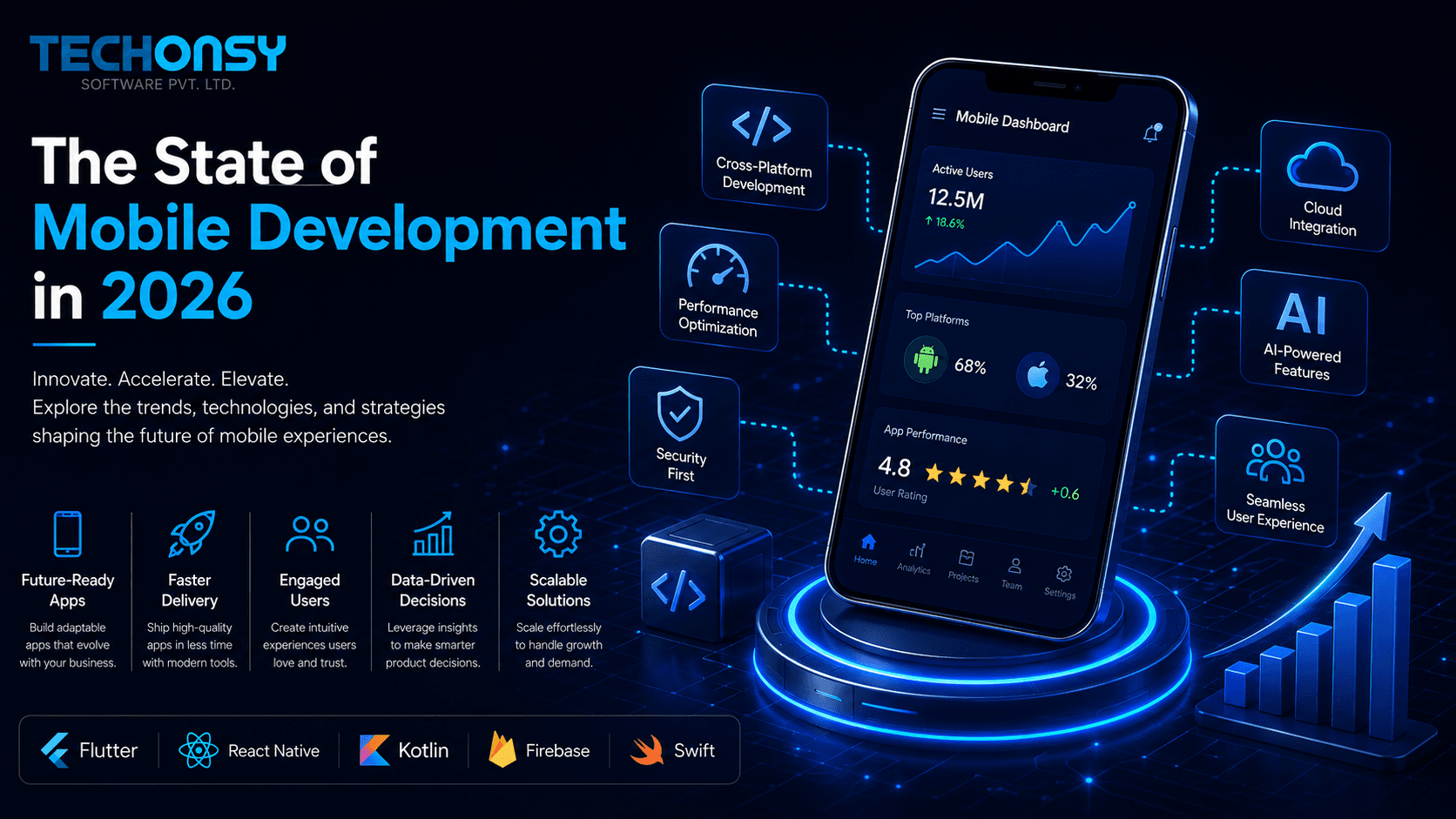
Mobile apps run the world now. Most people's first — and often only — digital touchpoint with a business is a screen they hold in one hand. That reality has quietly reshaped what it means to be a "mobile developer" over the last few years. It's no longer just about writing Swift or Kotlin. It's about choosing the right stack, building for speed, and designing for a user who will delete your app in seconds if it feels slow or clunky.
Here's a practical look at where mobile development stands today, and what matters most if you're building for phones.
Native vs. Cross-Platform: The Debate Has Matured
For years, the native-vs-cross-platform argument was framed as a tradeoff between performance and speed of development. That framing is outdated.
Native (Swift/SwiftUI for iOS, Kotlin/Jetpack Compose for Android) still wins when an app needs deep platform integration, cutting-edge hardware features, or the absolute best performance — think camera-heavy apps, AR experiences, or anything pushing the limits of the device.
Cross-platform frameworks (Flutter, React Native) have closed the performance gap dramatically. Flutter's compiled rendering engine and React Native's newer architecture (with the Fabric renderer and JSI) mean cross-platform apps can feel genuinely native in most everyday use cases.
The real decision now hinges less on "can it perform well enough" and more on team composition, existing codebases, and how much platform-specific polish the product actually needs.
The Rise of AI-Assisted Development
AI coding assistants have changed the daily rhythm of mobile development. Boilerplate UI, common architecture patterns, and repetitive glue code that used to eat hours now get scaffolded in minutes. This hasn't replaced developers — it's shifted their time toward the harder problems: state management at scale, offline-first architecture, and squeezing out battery and performance issues that only show up on real devices.
It's also lowered the barrier for smaller teams and solo builders to ship apps that would have needed a much bigger team a few years ago.
Performance Is the New Feature
Users have gotten less patient, not more. A few things that separate apps people keep from apps people delete:
Cold start time. If your app takes more than a couple seconds to become usable, you're losing people before they see any value.
Offline resilience. Apps that gracefully handle spotty connections — caching data, queuing actions, syncing when the network returns — feel dramatically more trustworthy than ones that just show an error screen.
Smooth animations. 60fps (or 120fps on newer devices) isn't a luxury anymore; janky scrolling reads as "broken" to most users even if the underlying logic is fine.
Design Systems and Platform Conventions Still Matter
Even with cross-platform tools, the best apps don't feel like they were dropped in from another planet. Respecting platform conventions — iOS's navigation patterns, Android's back-gesture behavior, each platform's typography and spacing defaults — is what makes an app feel like it belongs on the device. The apps that ignore this usually feel "off" even when users can't articulate why.
What This Means for Developers Getting Started
If you're new to mobile development, a reasonable path looks like this:
Pick one cross-platform framework (Flutter or React Native) and build something real with it before worrying about native code.
Learn to profile and debug on actual devices, not just simulators — simulators lie about performance.
Study a handful of apps you personally love using and try to articulate why they feel good. Most of it comes down to speed, predictability, and respecting platform norms.
Don't skip backend and API design just because you're "a mobile developer." Most app quality problems trace back to data — how it's fetched, cached, and synced — not the UI layer.
The Bottom Line
Mobile development in 2026 rewards people who think about the whole system: the framework choice, the performance budget, the platform's unwritten rules, and increasingly, how to use AI tools to move faster without losing craft. The tools have gotten better, but the fundamentals — speed, reliability, and respecting the user's time — matter more than ever.